Hawaiian Chicken (Huli Huli Chicken)

This post may contain affiliate links. Please read my disclosure policy.
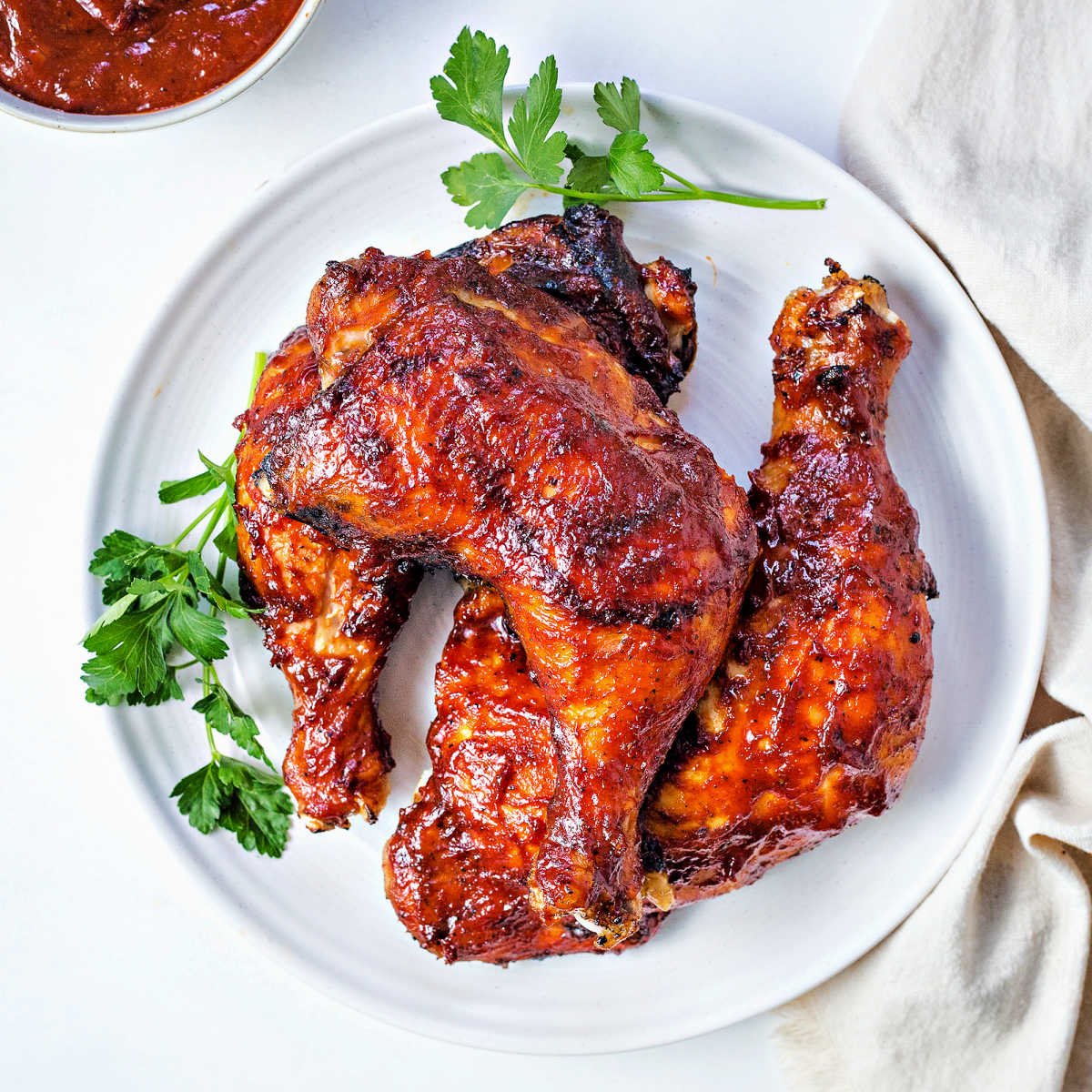
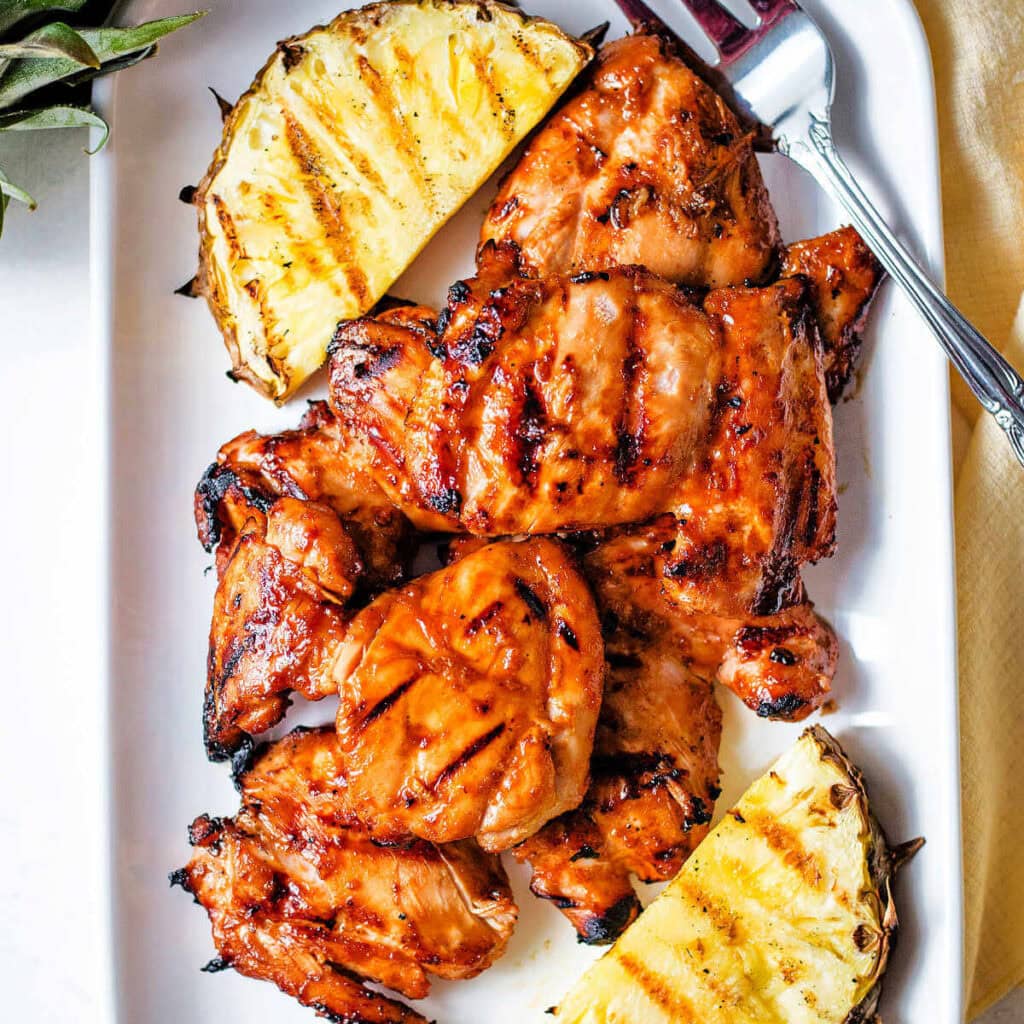
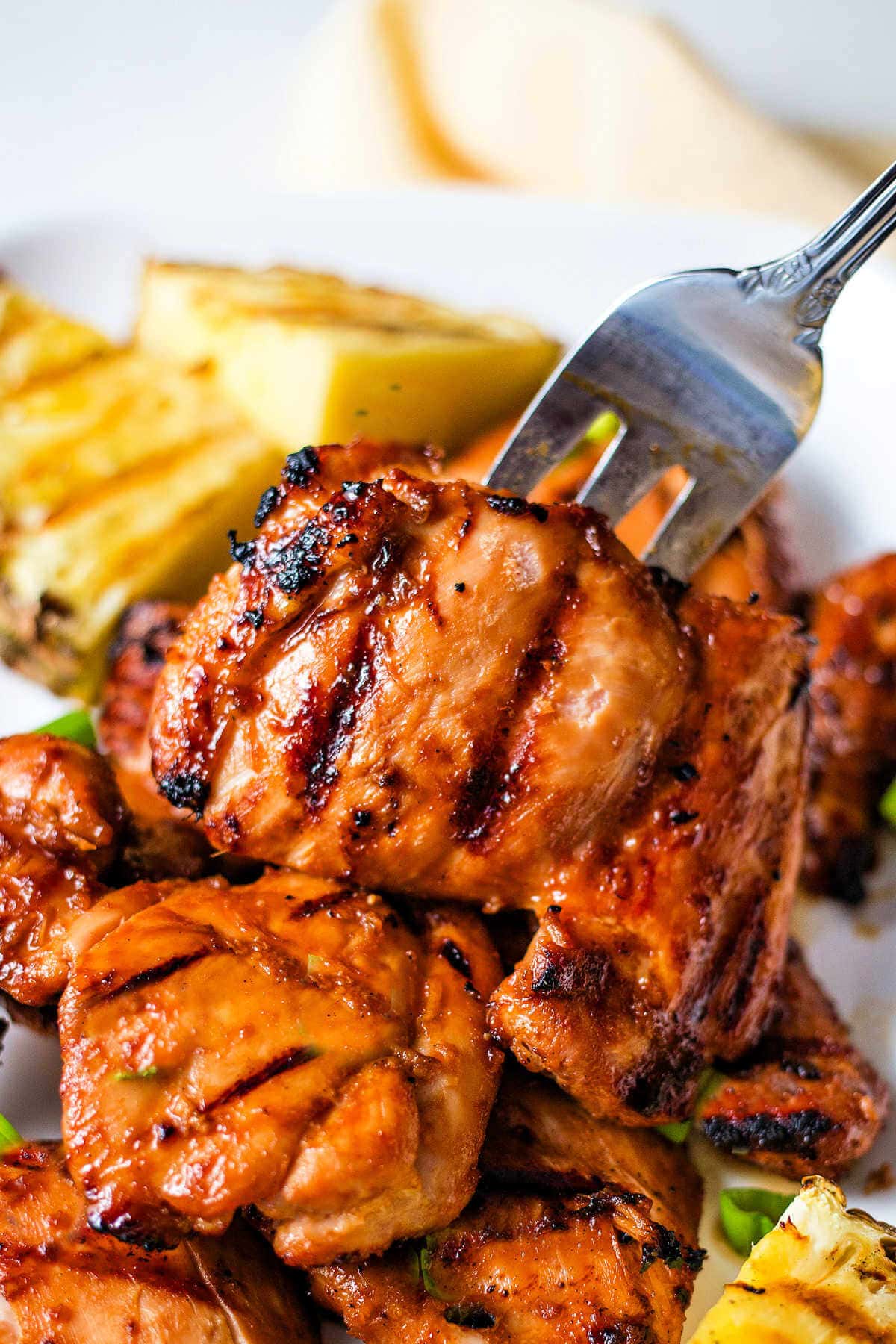
This grilled Huli Huli Chicken is a Hawaiian-inspired chicken recipe made with chicken thighs marinated in pineapple juice, soy sauce, brown sugar, ginger, and garlic for the perfect sweet and savory flavor. It’s grilled until smoky and caramelized with no bottled barbecue sauce needed, making it perfect for rice bowls, salads, or easy summer dinners.
Sheila’s Recipe Snapshot
Huli huli chicken is one of those recipes that earned a permanent spot in my summer cookout rotation after the very first bite.
The chicken thighs are marinated with canned pineapple juice, soy sauce, brown sugar, ginger, and garlic, which turns into a gorgeous sticky sauce once the chicken thighs hit the grill. They turn out perfectly tender and packed with flavor every time.
I usually serve this chicken over rice bowls with grilled pineapple and cucumbers, but it is equally as good sliced over a crisp salad on hot evenings when nobody wants a heavy meal.
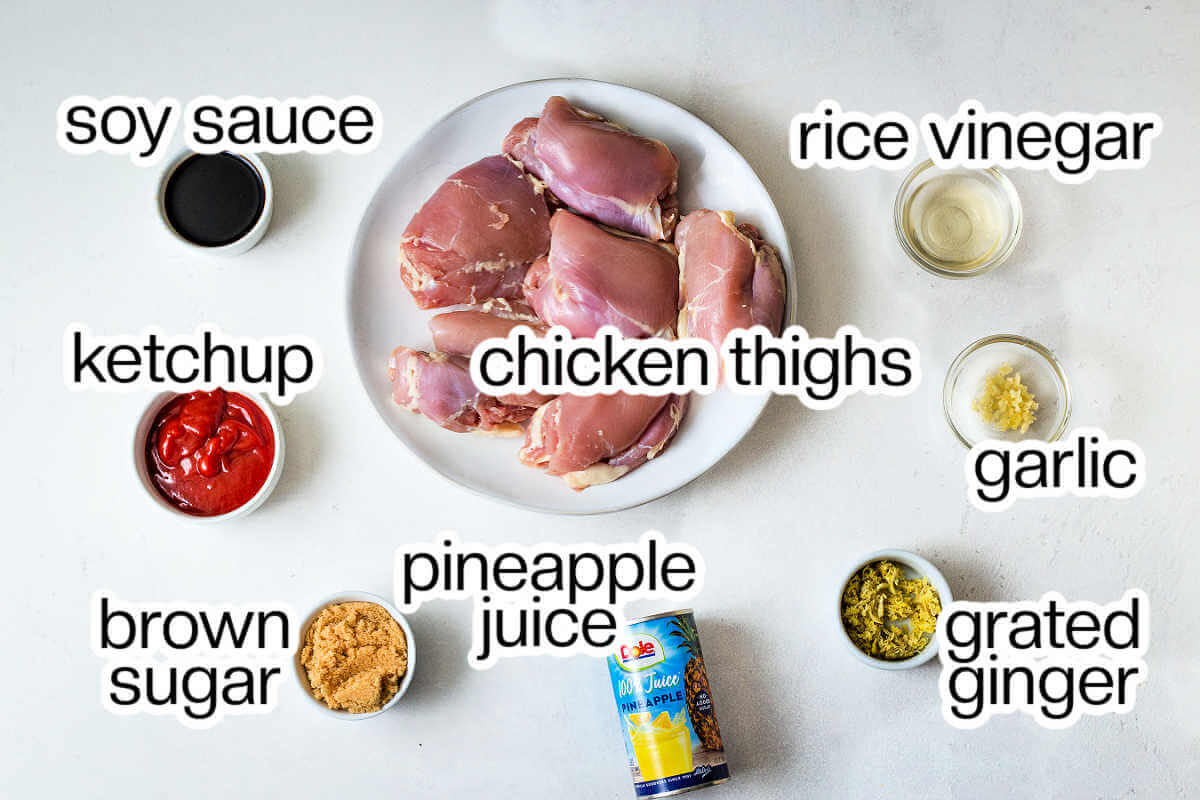
Ingredient Notes for Huli Huli Chicken
- Canned pineapple juice | Adds a tropical flavor while tenderizing the chicken. Canned juice works best as opposed to the fresh juice from the refrigerated section.
- Ketchup | Just like a traditional BBQ sauce, we need some ketchup to add body to the marinade.
- Soy sauce | Soy sauce seasons the chicken beautifully. No need to add extra salt!
- Brown sugar | Makes the marinade sticky and glossy and helps caramelize the chicken on the grill — be careful it doesn’t burn!
- Rice vinegar | To balance out all the flavors, we need a little acid like vinegar.
- Fresh ginger & garlic | For a vibrant, fresh flavor.
- Boneless skinless chicken thighs | Chicken thighs stay juicy on the grill and soak up all that marinade beautifully. Alternatively, you can use legs or breasts.
- Canola oil | To oil the grill grates so the chicken does not stick.
Variations and Substitutions
- Swap chicken thighs for what you have on hand. Chicken legs, chicken quarters, or even chicken breasts would all work fine here. Keep in mind that chicken breasts will cook faster on the grill.
- Use low-sodium soy sauce. This is a great option if you prefer a less salty marinade.
- Add a little heat. Stir in red pepper flakes or a spoonful of sriracha for spicy Huli Huli chicken.
- Try it with pork. This marinade is also delicious with pork chops or pork tenderloin.
- Cook it indoors. If the weather does not cooperate, grill the chicken on a grill pan or bake it in the oven until fully cooked.
How to Make Grilled Hawaiian Chicken
This recipe takes a little planning because of the overnight marinade, but the actual cooking could not be easier. Once the chicken hits the grill, the hardest part is waiting long enough for it to caramelize properly.
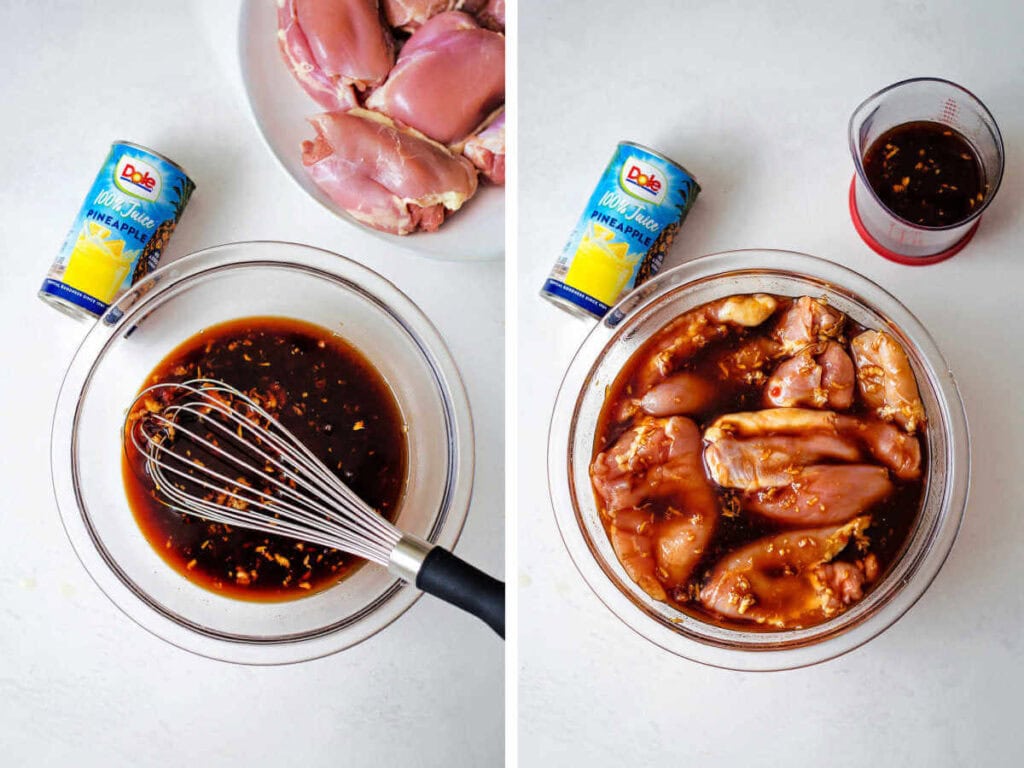
STEP 1 | Marinate the chicken
Whisk together the canned pineapple juice, ketchup, soy sauce, brown sugar, rice vinegar, ginger, and garlic in a large bowl. Reserve half of the mixture in a separate container for basting the chicken.
Nestle the chicken thighs into the marinade and cover tightly with plastic wrap. Refrigerate overnight, or at least 8 hours, turning once.
Save This Recipe
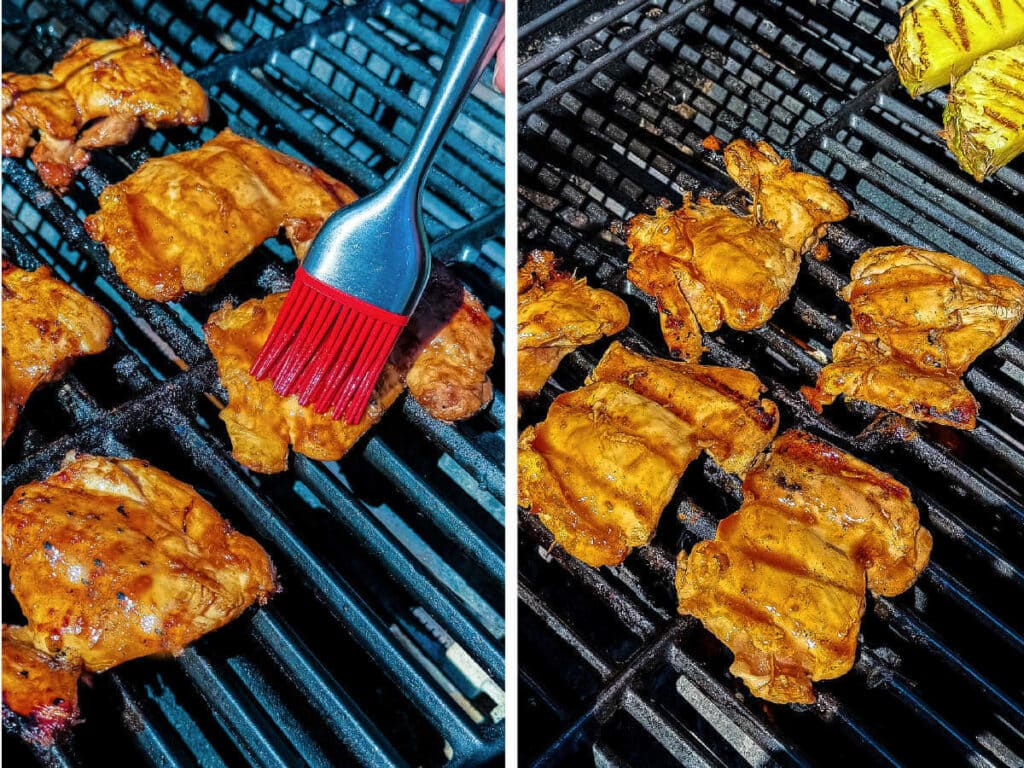
STEP 2 | Grill
Preheat the grill to medium-high (400°F) and oil the grates. Place the chicken thighs on the hot grill and discard the marinade.
Then, baste the chicken with the reserved marinade and close the lid. Grill the chicken for 4 minutes, then flip and baste again. Continue cooking for another 4 minutes, or until the internal temperature reaches 165°F.
Keep basting every few minutes until the chicken is deeply caramelized and glossy, but pull it off the grill as soon as it hits 165°F — the sugar in the marinade can take it from beautifully glazed to burnt quickly.
Recipe Success Tips
Storage Tips
- To store: Store leftover Hawaiian chicken in an airtight container in the fridge for up to 4 days.
- To freeze: Freeze cooked chicken in a freezer-safe container or freezer bag for up to 3 months. Thaw overnight in the refrigerator before reheating.
- To make ahead: You can marinate the chicken up to 24 hours ahead of time. You can also mix the marinade several days in advance and keep it refrigerated until ready to use.
Frequently Asked Questions
“Huli” means “turn” in Hawaiian. Traditionally, the chicken is turned repeatedly over the grill while cooking and basting.
Teriyaki chicken is a Japanese-inspired dish with a sweet and savory soy-based glaze, while Huli Huli chicken is a Hawaiian-style grilled chicken made with pineapple juice, soy sauce, ginger, and garlic. Huli Huli chicken also has a smokier, tangier flavor from the grill and huli huli marinade.
Absolutely. Bake at 400°F for about 25 to 30 minutes, or until the chicken reaches an internal temperature of 165°F.
Looking for More Chicken Recipes?
If you enjoyed this one, my Italian Grilled Chicken and Chicken Skewers are both worth adding to the summer grill rotation. And if you’re in the mood for something indoors, my Air Fryer Chicken Wings are a family favorite any time of year.
Browse the full chicken recipe collection for grilled, baked, and fried options.
What to Serve With Hawaiian Chicken
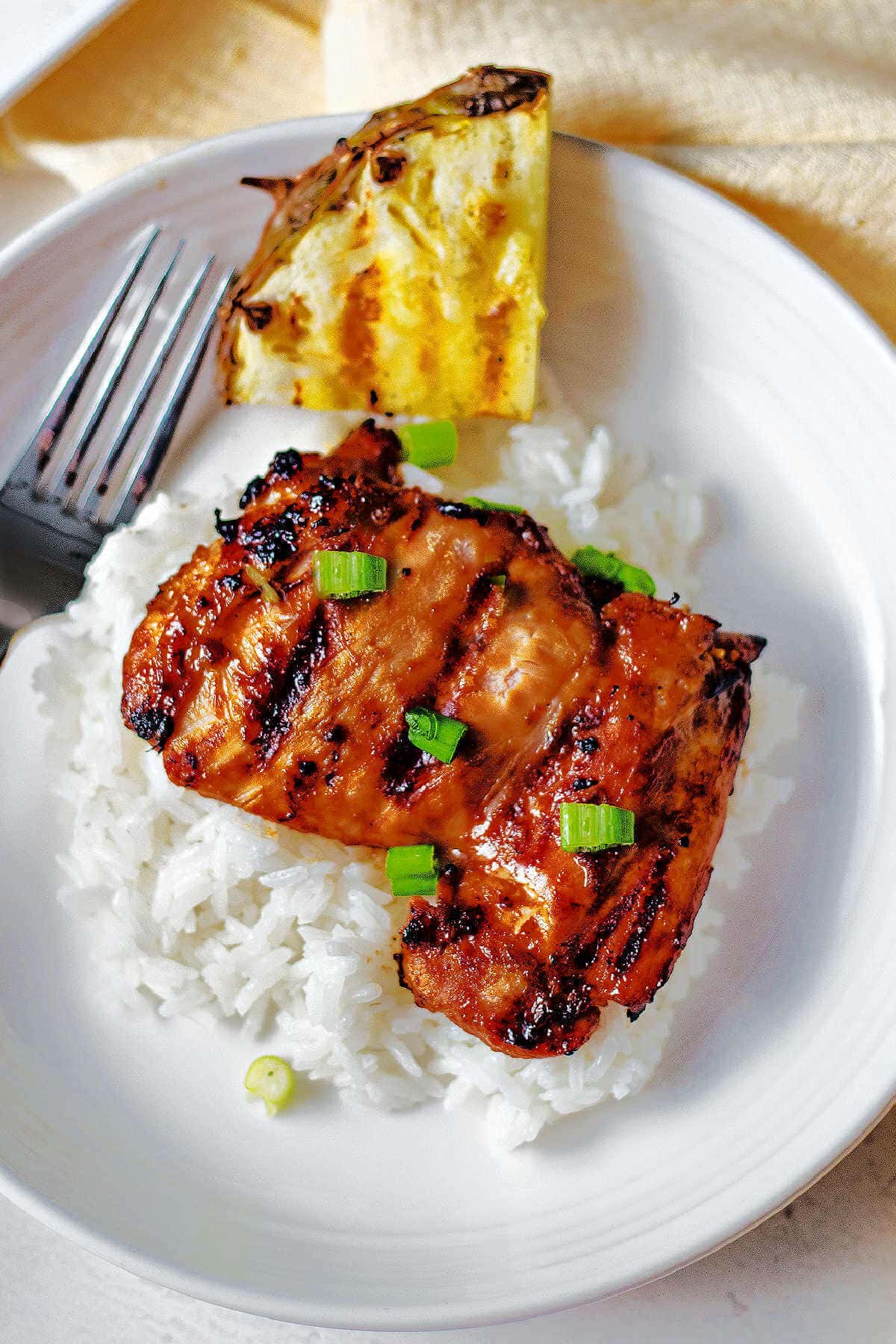
This Hawaiian-style chicken is perfect served over Instant Pot Jasmine Rice or with a side of Macaroni Salad. I also love it with some grilled pineapple slices, fresh cucumbers, shredded carrots, and green onions for an easy rice bowl.
Leftovers are especially good sliced cold over an Asian Salad the next day, which is usually how my husband requests it for lunch.
Love this recipe? Bookmark it for the future!
Simply tap the heart symbol located in the lower right corner of your screen, and the recipe will be securely stored in your own recipe box.
Grilled Hawaiian Chicken
Ingredients
Marinade
- ¾ cup pineapple juice canned
- ¼ cup ketchup
- ¼ cup soy sauce
- ¼ cup brown sugar light or dark
- 2 tablespoons rice vinegar
- 1 tablespoon fresh ginger grated
- 2 cloves garlic minced
Grilled Chicken
- 2 lbs. boneless, skinless chicken thighs
- Canola oil for brushing the grill grate
Instructions
Marinating
- Whisk together the canned pineapple juice, ketchup, soy sauce, brown sugar, rice vinegar, ginger, and garlic in a large bowl. Reserve half of the mixture in a separate container for basting the chicken.
- Nestle the chicken thighs into the marinade and cover tightly with plastic wrap. Refrigerate overnight, or at least 8 hours, turning once.
Grilling
- Preheat the grill to medium-high (400°F) and oil the grates.
- Place the chicken thighs on the hot grill and discard the marinade.
- Then, baste the chicken with the reserved marinade and close the lid. Grill the chicken for 4 minutes, then flip and baste again Continue cooking for another 4minutes, or until the internal temperature reaches 165°F.
- At this point, continue basting until the chicken is deeply caramelized and glossy, watching closely so the sugar doesn't burn and the chicken doesn't overcook.
Notes
- Use canned pineapple juice only. Fresh refrigerated juice contains enzymes that will over-tenderize the chicken, leaving it mushy. Canned juice delivers the same tropical flavor without affecting the texture.
- Marinate for a few hours or overnight. The longer the marinate time the more flavor soaks into the chicken. If short on time, aim for at least 2 hours minimum.
- Reserve marinade before adding raw chicken. This keeps your basting sauce safe to use while grilling. Never baste with marinade that has touched raw meat unless boiled first.
- Watch the grill carefully. The sugar in the marinade can cause the chicken to go from caramelized to burnt quickly. Keep the lid closed when possible and flip as needed.
- To store: Keep leftovers in an airtight container in the fridge for up to 4 days.
- To freeze: Freeze in a freezer-safe container for up to 3 months. Thaw overnight in the fridge before reheating.
- To make ahead: Marinate up to 24 hours ahead, or mix the marinade several days in advance and refrigerate until ready.
Nutrition
Life Love and Good Food does not claim to be a registered dietitian or nutritionist. Nutritional information shared on this site is only an estimate. We recommend running the ingredients through an online nutritional calculator if you need to verify any information.