
Homemade Stone-Ground Mustard
This post may contain affiliate links. Please read my disclosure policy.
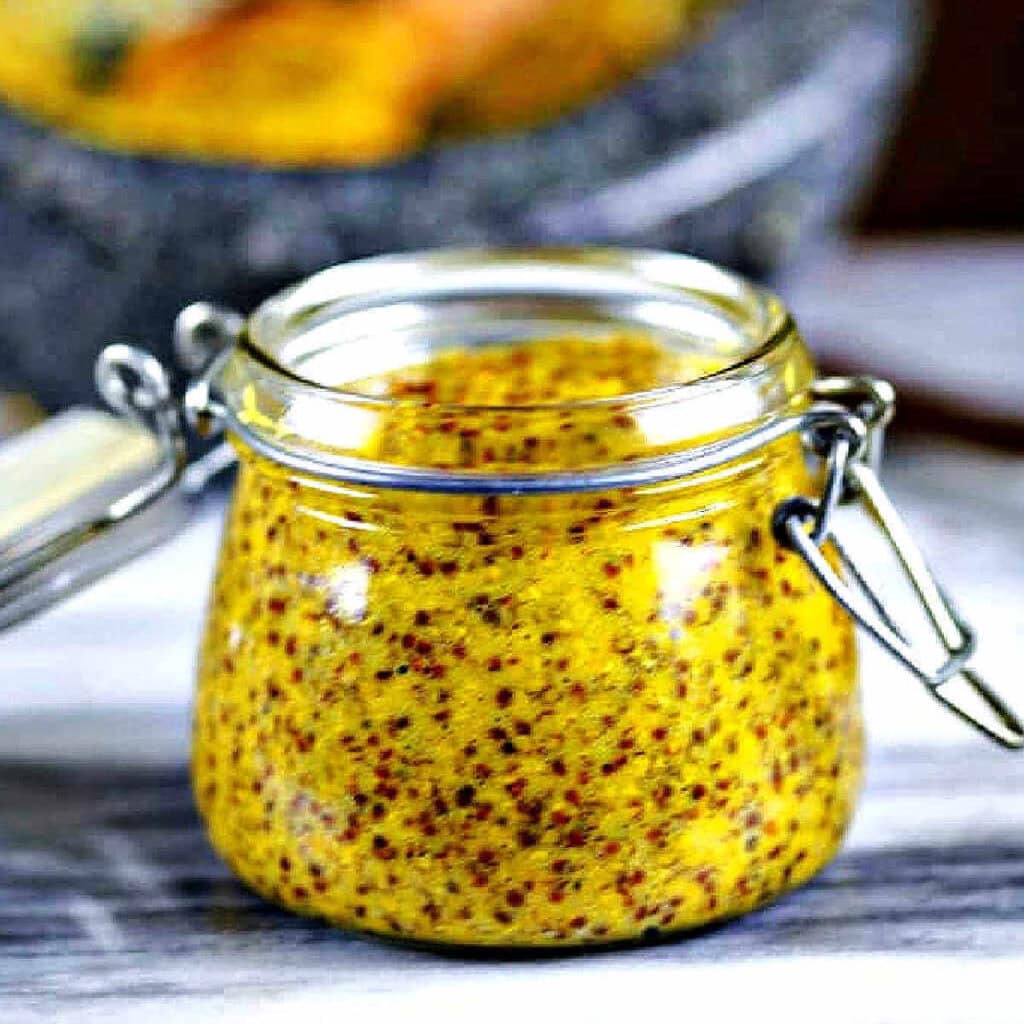
This Homemade Stone-Ground Mustard is a simple from-scratch condiment made with brown mustard seeds, white wine vinegar, and a handful of pantry spices — ground to a coarse, spicy paste using a mortar and pestle in just 15 minutes. No cooking required, no preservatives, and it keeps in the refrigerator for up to a year.
Sheila’s Recipe Snapshot
This recipe came about the same way a lot of good things do — one idea leading to another. On a visit to my daughter Allison’s house in St. Louis, I watched as she made her own stone-ground mustard in her kitchen using a mortar and pestle her mother-in-law had gifted her. I was immediately proud and impressed.
Back home, I pulled out my own mortar and pestle — the same one I use regularly for my citrus salmon dry rub — and gave it a try. The result was a spicy, tangy mustard with real texture and depth that no store-bought jar can match.
I may not reach for this recipe every week, but when I do — spread on a turkey sandwich, stirred into a vinaigrette, or set out on a charcuterie board — it’s always the one that gets noticed. The flavor is completely different from anything store-bought.
Ingredient Notes
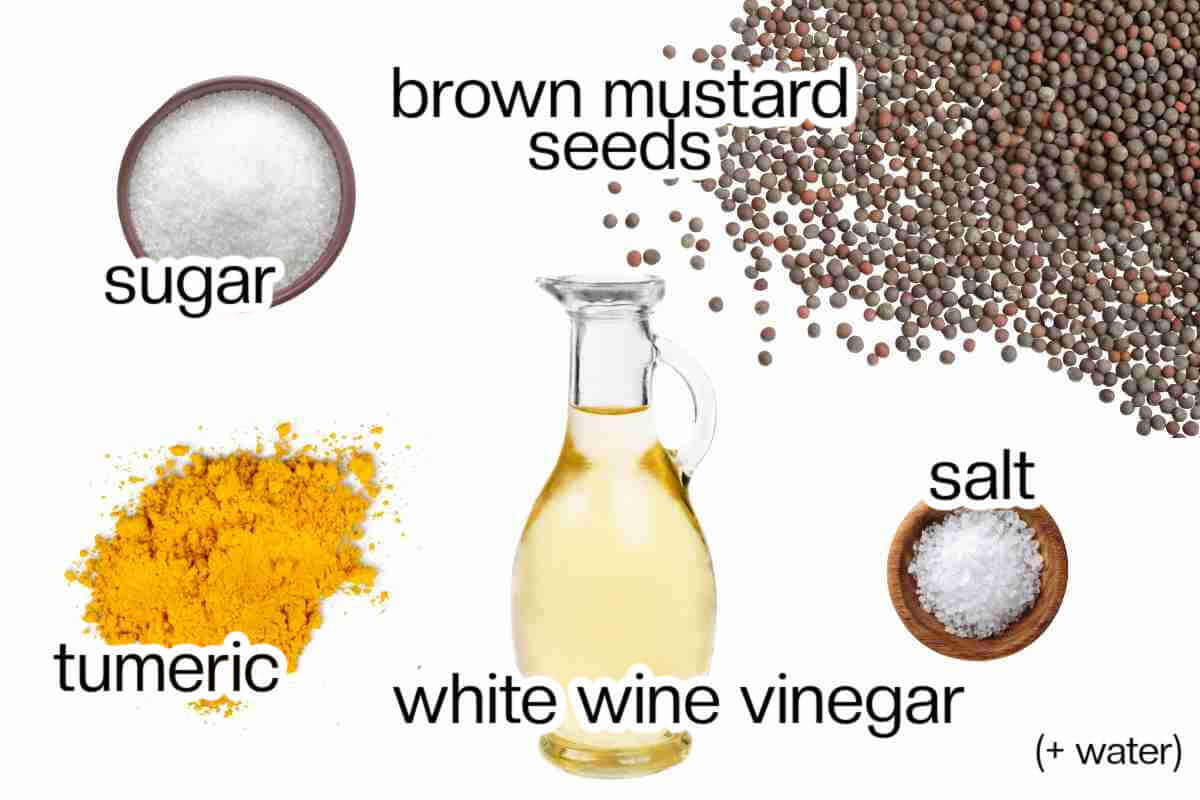
- Brown mustard seeds | These tiny brown seeds are more pungent than the yellow variety and are used in this recipe to create a spicy spread. This same technique may be used with yellow mustard seeds, although the spread will have a mild, yet sharp flavor.
- Water | As the seeds are crushed, peppery oil is released. Water, either hot or cold, works to stabilize the heat. Hot water will break down some of the pungent compounds, while cold water will keep them intact.
- White wine vinegar | Adding acidity to the mustard makes the pungency last longer during its shelf life. Champagne vinegar is a good substitute.
- Turmeric | Besides adding a little bit of spice, turmeric gives the mustard a more pleasing yellow color.
- Sugar | Adding a little sugar counteracts the bitterness in the mustard oils when the seeds are crushed.
- Salt | Just a bit acts as a flavor enhancer.
Variations and Substitutions
- Yellow mustard seeds: Works in place of brown mustard seeds for a milder, less pungent spread — the technique is identical.
- Champagne vinegar: A good substitute for white wine vinegar with a slightly more delicate acidity.
- Rice vinegar: Works well as an alcohol-free alternative to white wine vinegar.
- Honey mustard variation: Substitute honey for the sugar for a sweeter, more complex flavor profile.
- Stevia: Can substitute for sugar in equal measure for a sugar-free version.
- Spicier mustard: Use cold water and let the mustard rest for the full 24 hours — the heat intensifies as it sits.
- Milder mustard: Use hot water, which breaks down some of the pungent compounds during grinding.
How to Make Stone-Ground Mustard at Home
Stone-ground mustard is made by grinding brown mustard seeds with water and vinegar until it becomes a coarse-textured spread.
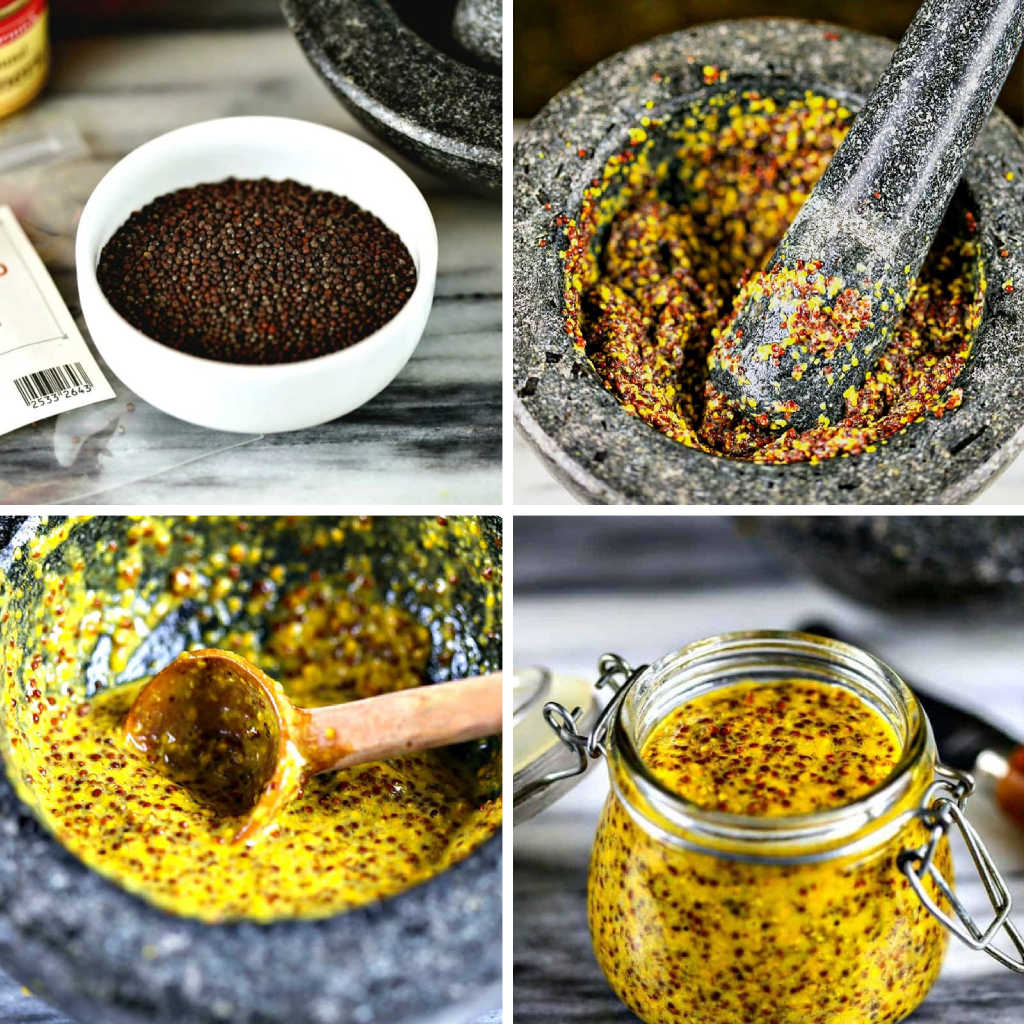
STEP 1 | Crush the mustard seeds
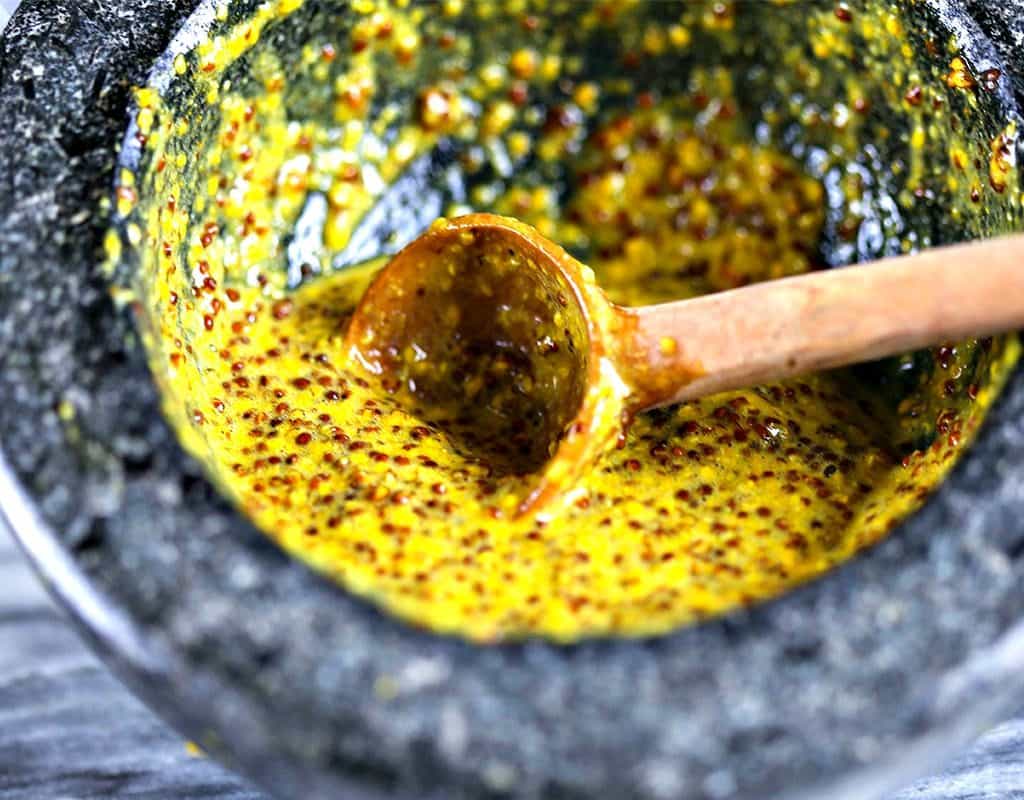
Add mustard seeds into the mortar. Rock the pestle back and forth to grind the seeds. After a few seconds, you’ll notice a yellow mustard powder start to appear. Note: this process requires a bit of muscle.
STEP 2 | Add water
Slowly add water, working the seeds into a coarse paste. The water temperature, whether cold or hot, will create a chemical reaction as you grind the seed that results in how much heat is in the mustard.
Save This Recipe
Remember, use cold water for a spicier mustard and hot water for a milder mustard.
STEP 3 | Add remaining ingredients
Season the mustard with salt and add turmeric and white wine vinegar, continuing to grind until you get the desired consistency. Leaving some whole seeds creates an interesting coarse texture.
Store the mustard in a glass jar in the refrigerator for 24 hours before serving to allow the flavor to meld.
Recipe Success Tips
Storage Tips
- This mustard will keep up to one year in the refrigerator.
- Remember to use a glass jar since plastic containers can absorb the strong mustard aroma over time.
Frequently Asked Questions
Yes — yellow mustard seeds work with the same technique and produce a milder, less pungent spread. If you prefer a gentler heat with a slightly sharper bite, yellow seeds are a good choice. Brown mustard seeds are recommended for a bolder, more complex flavor.
A mortar and pestle gives you the most control over texture — you can leave some seeds whole for that signature coarse consistency. In a pinch, a spice grinder or clean coffee grinder works as well, but pulse in short bursts to avoid grinding the seeds too fine. The goal is a coarse paste, not a smooth one.
Yes — stevia can be substituted in equal measure for a sugar-free version. Keep in mind that sugar does more than add sweetness here — it counteracts the bitterness released when the mustard seeds are crushed, so taste and adjust accordingly.
Champagne vinegar is the closest substitute with a slightly more delicate acidity. Rice vinegar also works well and is a good alcohol-free alternative. Avoid distilled white vinegar — it’s harsher and can overpower the more delicate flavors in the mustard.
Looking for More Homemade Condiment Recipes?
If you have an abundance of fresh basil, try my Basil Pesto Spread recipe (you can make it either in a food processor or in a mortar and pestle like the Italians do). Also, it’s simple to make your own Buffalo Wing Sauce or Homemade BBQ Sauce on the stovetop with pantry ingredients.
Check out my collection of condiments and sauces for more easy spice blends, salad dressings, and more.
What to Serve With Homemade Stone-Ground Mustard
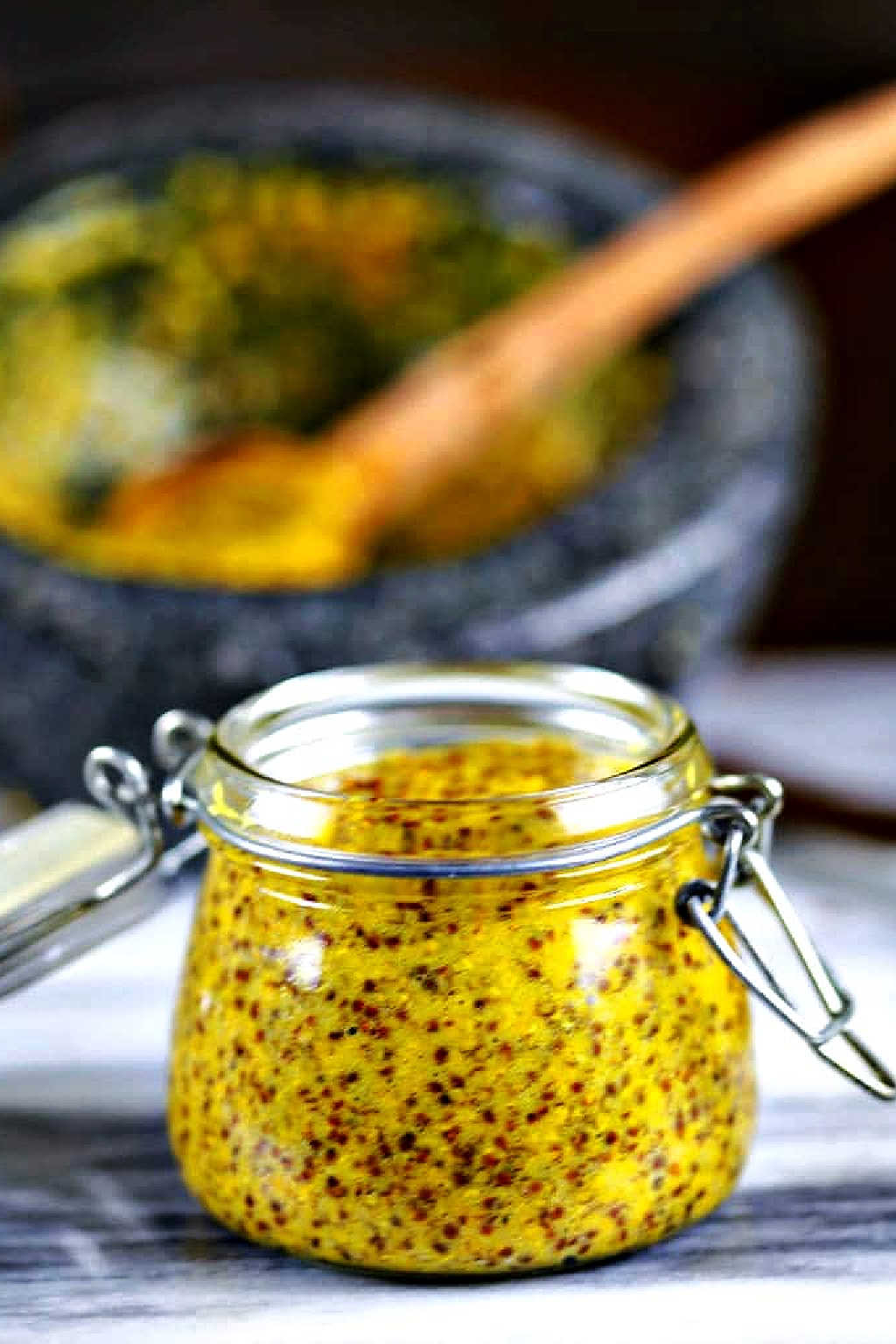
This mustard is a popular condiment for hearty sandwiches, charcuterie boards, and hot dogs. I also like to use stone-ground mustard in my favorite chicken salad and in the mustard dipping sauce for my fried green tomatoes.
Love this recipe? Bookmark it for the future!
Simply tap the heart symbol located in the lower right corner of your screen, and the recipe will be securely stored in your own recipe box.
Homemade Stone-Ground Mustard
Ingredients
- 6 tablespoons brown mustard seed
- 1/2 cup water (cold or hot)
- 1 1/2 tablespoons white wine vinegar
- 1/2 teaspoon salt
- 1/2 teaspoon turmeric
- 2 tablespoons sugar
Instructions
- Crush mustard seed using a mortar and pestle for a few seconds.
- Slowly add water and continue grinding the seed. Use hot water for a milder mustard and cold water for a spicier mustard. Grind until the water is incorporated, leaving some seeds whole.
- Add the remaining ingredients and continue grinding until the desired consistency is achieved. Store the mustard in a glass jar in the refrigerator for 24 hours before serving.
- Mustard will keep for up to one year in refrigerator.
Notes
- Rest for 24 hours before serving — fresh-ground mustard is sharp and unbalanced right after making. A full day in the refrigerator makes a noticeable difference.
- Leave some seeds whole — a fully smooth paste loses the coarse texture that makes stone-ground mustard distinctive.
- Add water gradually — too much too quickly makes the mustard thin and hard to thicken.
- Don’t adjust consistency right away — the mustard thickens as it chills. Refrigerate first, then reassess.
- Store in a glass jar in the refrigerator for up to one year — plastic containers absorb the strong mustard aroma over time.
Nutrition
Life Love and Good Food does not claim to be a registered dietitian or nutritionist. Nutritional information shared on this site is only an estimate. We recommend running the ingredients through an online nutritional calculator if you need to verify any information.

Shield,
I was wondering if this recipe is able to be canned?
Since this mustard keeps for up to a year in the refrigerator, I’ve never tried canning.
I’m confused by the serving amount, when I double the recipe what does 2/2 pint mean? Does that mean 1 pint? 2 pints?
I’m so sorry for the confusion. The recipe originally indicated that the yield is 1/2 pint of mustard, or 1 cup. I’ve updated the recipe card to reflect the number of 2-teaspoon-size servings instead. Thank you for reaching out!
Can you grind the mustard seeds in a food processor? I don’t have a mortar/pestle.
Patricia, unfortunately I don’t think you’d get the same results with a food processor.
I just made this and it’s in my frig.
This was a great easy recipe to follow! Texture and taste are phenomenal. No need to buy store bought!
Thank you.
I made this two days ago and this is by far the worst tasting mustard I’ve ever had. It came out watery and even after thickening it up, it just has an awful flavor.
can you use yellow mustard seeds instead of brown?
I haven’t tried yellow mustard seeds, but I don’t see why not!
I’m diabetic. Can I use stevia in place of the sugar?
Hi, Kim. I believe you could substitute Stevia for the sugar in this recipe. Let me know how you like it!
Hi I can’t have any alcohol any way to replace the white wine vinegar ?
Nisha, if you can’t have the white wine vinegar, I would suggest substituting rice vinegar in this recipe.
You contradict in your explanation and the recipe. Cold water and hot water, which is it. They say the opposite. Want to make the spicy version but don’t know wether to use cold or hot water.
Thanks for pointing out my discrepancy! I’ve adjusted the recipe to note that you should use hot water for a milder mustard and cold water for a spicier mustard.
No contradiction. The recipe says hot for a mild mustard and cold for a spicier mustard.